This word is very common in Indian folklore and fairy tales, not to mention religious texts. The commonest depiction is of a devotee praying to a god, and the god, pleased with all this devotion, raises his or her hand, palm forward, and says “tathaastu”. We’ve all heard these stories from our childhood.
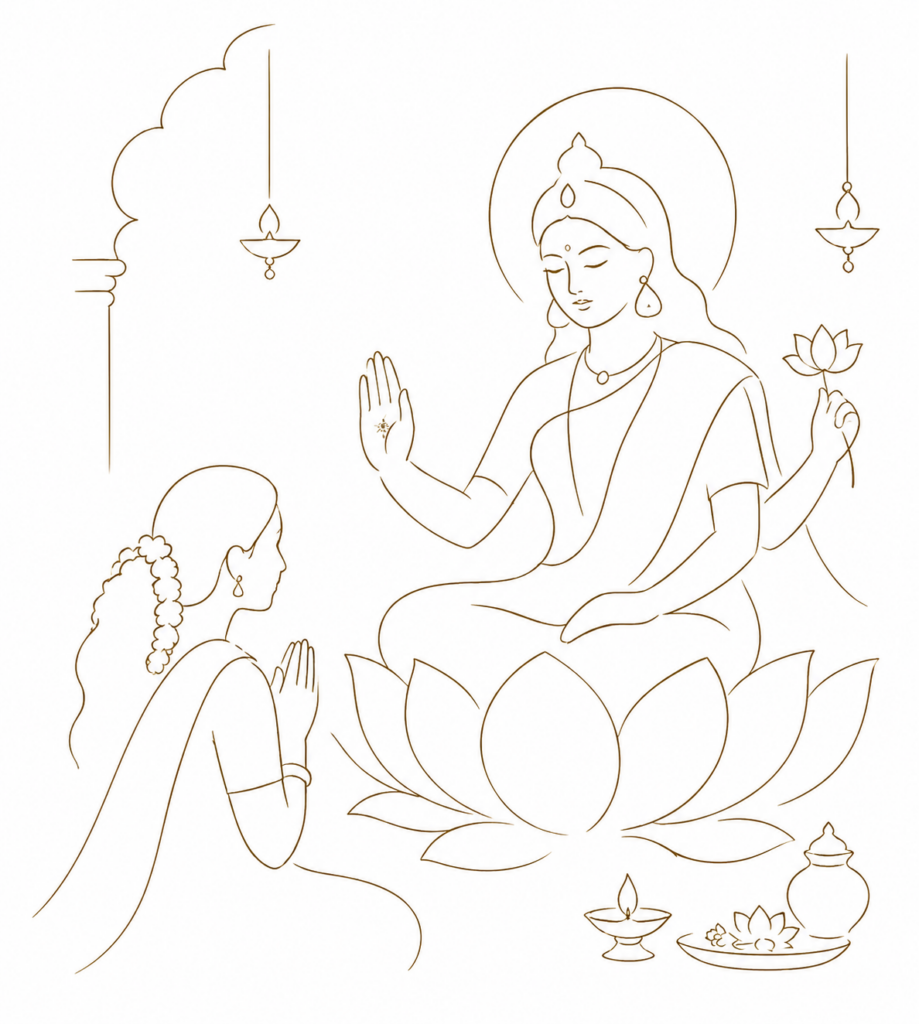
Translated to English, the word means “so be it”, or something very close. The word can be split into “tat” (meaning “that”) and “astu” (meaning “be” or “is”). Put these together, and you get the drift. The typical context is the devotee praying for a wish to be granted, and the god or goddess grants the wish, saying “so be it”.
After understanding whatever I’ve understood in the last few years, my relationship with this word has changed. It’s been a total role reversal.
I say “tathaastu”
Now, I see the universe as Ma’s doing, and I say “Thy wish is being done”. It’s an unnecessary statement, it’s merely a recognition of what is. The recognition changes nothing.
So, now, Ma plays, and I say “tathaastu”. I don’t raise my hand, palm forward. I just bow and fold my hands.
I feel that this is the only thing a devotee who sees Ma can really say. There is no space for asking for a boon or a blessing. There is only space for an acceptance of Ma in totality, and the word “tathaastu” fits in well, after a fashion. A more strictly accurate phrase from the vedantic tradition may be “tat sat”, which means “that is truth” where “that” refers to the Absolute.
All you can tell your Ma is “so be it”, in case you feel the need to say anything at all.